Redesigning Food Access: A Strategy for Equitable Nutrition in Cincinnati
Role
Strategy & Research
Category
Design Strategy
Date
Nov '24 - Dec '24
Tools Used
Miro, Canva
Conducted design research to explore barriers to food access in Cincinnati’s low-income neighborhoods and food deserts, focusing on user-centered insights and community engagement.
Developed strategic interventions and prototypes to improve access to affordable, nutritious food, addressing geographic gaps, food education, and social stigma.
Credits: Ciara Potter, Oluwafunmilola Fasan, Mario (Mark) Bermejo
Breif
Hunger is a simple feeling understood by many, yet it is also an incredibly complex issue affecting billions of people worldwide. The main drivers of hunger today include conflict, climate change, and economic crises.
In Cincinnati, 3 in 10 people don’t know the source of their next meal, and 60 million pounds of food is wasted per year in Hamilton County.
-According to the Cincinnati Enquirer
Food Deserts
Food insecure areas lacking access to healthy and affordable food and is defined by weighing factors such as income level, proximity to grocery stores, and access to transportation.
Areas that are low income (poverty rate is greater than or equal to 20%) and where 33% or more of the population lacks a grocery store within 1 mile for urban areas and within 10 miles for rural areas
Secondary Research
Current State of Food Desserts in Cincinnati
Geographical Disparities
Cincinnati has distinct geographic food deserts, especially in low-income neighborhoods, where residents struggle with access to fresh food due to fewer grocery stores and limited affordable food options nearby.
Transportation Challenges:
Many residents in Cincinnati lack reliable transportation, making it hard to access grocery stores located further from low-income areas, which worsens the accessibility issue.
Policy and Economic Incentives
The city is working on policies to attract grocery stores to underserved areas. Economic incentives like tax breaks are being explored to address food access in Cincinnati's food deserts.
Health and Economic
Limited access to nutritious food in Cincinnati neighborhoods is linked to increased rates of diet-related health conditions like obesity and diabetes, which also contribute to higher local healthcare costs.
Community Initiatives
Cincinnati is seeing a rise in urban farming projects and community gardens as grassroots efforts to improve local food accessibility. These initiatives aim to provide fresh produce while promoting local involvement and ownership.
Reliance on Convenience Stores
In Cincinnati’s underserved areas, convenience stores are often the primary food source
Primary Research
Identifying the Problems
Final Problem
Statement
Many low-income neighborhoods in Cincinnati, especially food deserts, struggle to access affordable, nutritious food due to geographic disparities, limited transportation, and reliance on convenience stores. Social stigma around food assistance, safety concerns, and lack of food education make the issue worse. This leads to higher rates of diet-related health issues, mental health struggles, and dependence on food resources, highlighting the need for equitable solutions to improve food access and community resilience.
Concept Ideation
Final Concept
Avondine
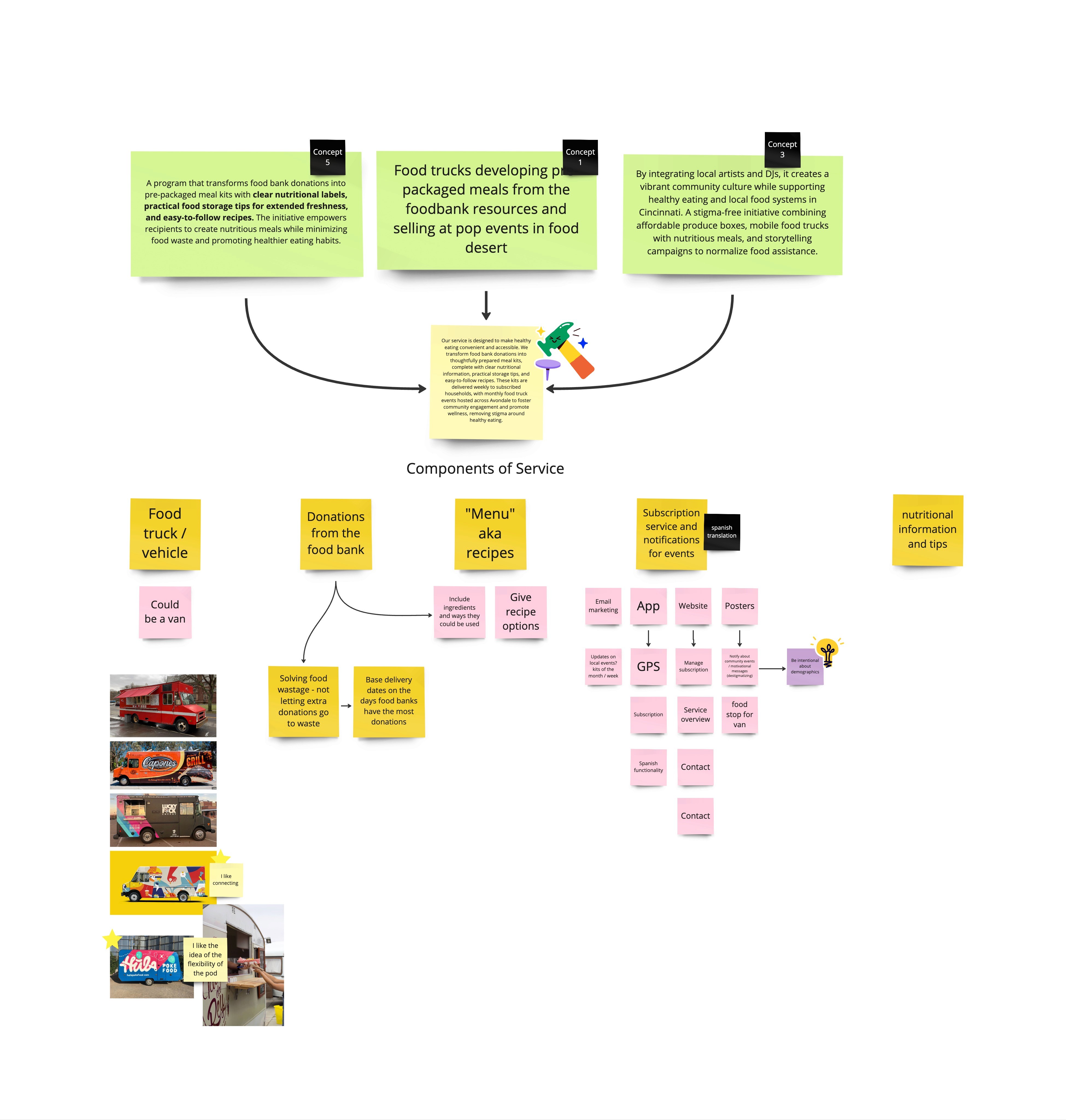
Our concept is designed to make healthy eating convenient and accessible. We transform food bank donations into thoughtfully prepared meal kits, complete with clear nutritional information, practical storage tips, and easy-to-follow recipes. These kits are delivered to subscribed households, with monthly events hosted in Avondale to foster community engagement and promote wellness, removing stigma around healthy eating and food assistance.